

When I Don’t Understand, Ask for Wisdom
James 1:5-8
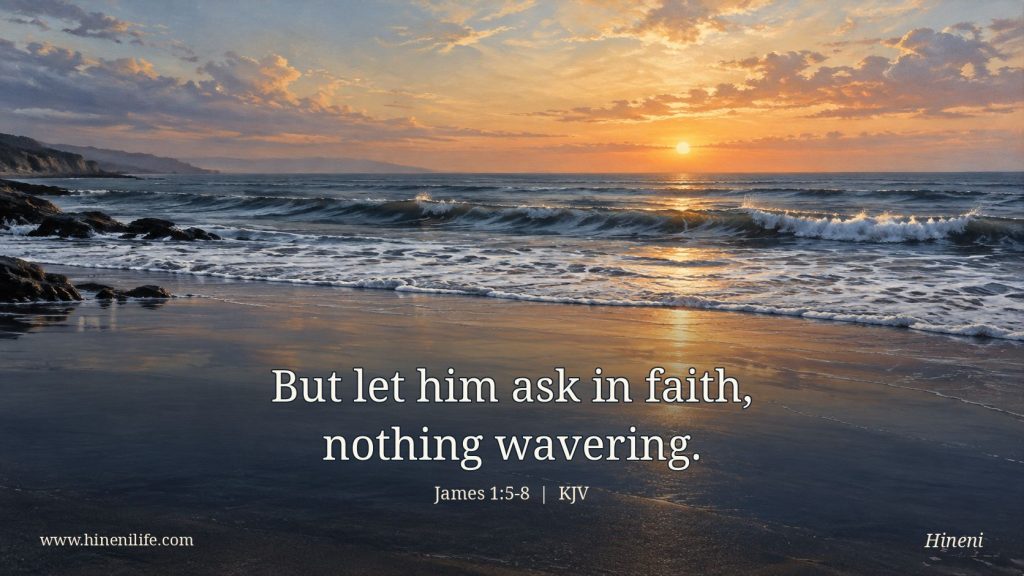
“If any of you lacks wisdom, let him ask God, who gives generously to all without reproach, and it will be given him.”
– James 1:5, ESV
Yesterday, as I reflected on James 1:2-4, I was reminded that trials are not meaningless interruptions in our lives. God can use the testing of our faith to produce steadfastness, and steadfastness can lead us toward spiritual maturity.
But then James brings up something very practical:
What do I do when I am going through a trial and I don’t know what to do?
His answer is simple:
Ask God for wisdom.
More Than Academic Wisdom
James 1:5 is often quoted to students, and rightly so.
When a child is struggling with studies, when someone is learning a new skill, preparing for an examination or certification, learning new technology, or facing a difficult decision in their career, we can certainly ask God for wisdom.
But when we look at the verse in its context, we see that James is speaking about something deeper.
He has just been talking about trials, testing of faith, steadfastness, and maturity.
So the wisdom James is speaking about is not simply:
“Lord, help me become more intelligent.”
It is also:
“Lord, I don’t understand what is happening in this trial. Show me how I should respond. Help me see this situation rightly. Teach me what faithfulness looks like here. Give me wisdom to endure, to make the right decisions, and to remain faithful to You.”
That changes the way I read this verse.
Sometimes what I really want from God is an explanation. But what I may actually need is wisdom.
I May Not Understand the Trial
There are situations where I may never completely understand why something happened.
I may ask:
“Why is this happening to me?”
“Why has God allowed this?”
“What is God doing through this?”
And sometimes Scripture does not promise that I will receive a detailed explanation.
But James gives me something better for the journey.
Ask God for wisdom.
I may not understand everything God is doing, but I can ask Him to show me how I should walk through what I am facing.
How should I respond?
What should I learn?
What should I surrender?
What should I stop doing?
What should I continue doing?
How should I speak?
How should I make this decision?
How can I remain faithful to Christ in this situation?
This is the wisdom I need.
God Gives Without Reproach
James gives another beautiful encouragement:
“God, who gives generously to all without reproach…”
– James 1:5, ESV
God does not respond to our need for wisdom with irritation.
He does not say, “You are asking this again?” or “Why don’t you already know?”
He invites us to ask.
This reminds me that dependence upon God is not weakness.
Recognizing that I need God’s wisdom is itself an expression of faith.
I don’t have to pretend that I understand everything.
I can come honestly before God and say, “Lord, I don’t know what to do. Give me wisdom.”
Ask Without a Divided Heart
But James does not stop there.
“But let him ask in faith, with no doubting…”
– James 1:6, ESV
The doubting James describes is not simply having questions, fears, or moments of weakness.
A believer can struggle.
A believer can have questions.
A believer can become afraid.
A believer can even go through seasons when faith feels weak.
James is addressing something deeper – a divided heart.
He describes such a person as:
“a wave of the sea that is driven and tossed by the wind.”
– James 1:6, ESV
And then he uses the striking expression:
“he is a double-minded man, unstable in all his ways.”
– James 1:8, ESV
The problem is not that I have questions.
The problem is when I want to trust God while keeping another foundation underneath me.
“I trust God – but ultimately I trust myself.”
“I trust God – but my security is really my money.”
“I trust God – but I will follow my own way if His way becomes difficult.”
That is where James’ warning becomes very searching.
What Am I Really Depending On?
This made me examine my own heart.
God has given us abilities, knowledge, experience, opportunities, and resources. There is nothing wrong with using them responsibly.
I should study.
I should work.
I should learn.
I should plan.
I should develop my skills.
But none of these things should become the foundation of my confidence instead of God.
My ability is a gift.
My resources are a gift.
My opportunities are a gift.
And the One who gives them is greater than the gifts themselves.
So when I face a trial, I don’t want to live as though everything depends upon my ability to figure things out.
I want to be able to say:
“Lord, You have given me abilities, but I need Your wisdom. You have given me resources, but my confidence is in You. I may not understand what You are doing, but I trust You enough to follow You.”
I Don’t Need All the Answers
James 1:5-8 brings together two things that I often separate:
I need wisdom, and I need trust.
I can ask God for wisdom without demanding that He explain everything.
I can acknowledge that I don’t understand without abandoning my confidence in Him.
I can use the abilities God has given me without making those abilities my god.
And I can walk through a trial without knowing exactly where it will lead.
Perhaps that is one of the lessons James wants me to learn.
When I don’t understand what God is doing through my trial, I don’t need to have all the answers. I need to ask God for wisdom and trust Him with an undivided heart.
Lord, sometimes I don’t understand what You are doing in the situations I face.
I may want an explanation, but today I ask You for something deeper – wisdom.
Give me wisdom to see my circumstances rightly, wisdom to respond faithfully, wisdom to make the right decisions, and wisdom to remain steadfast when the path is difficult.
Thank You that You give generously and without reproach.
Forgive me when my heart becomes divided – when I say I trust You but place my confidence in my own ability, resources, or understanding.
Help me to use everything You have given me responsibly, while remembering that my ultimate confidence is in You.
Even when I cannot understand the whole picture, help me trust the One who sees it completely.
In Jesus’ name,
Amen.
Hineni