

More Than the Promised Land
Exodus 33:1-11
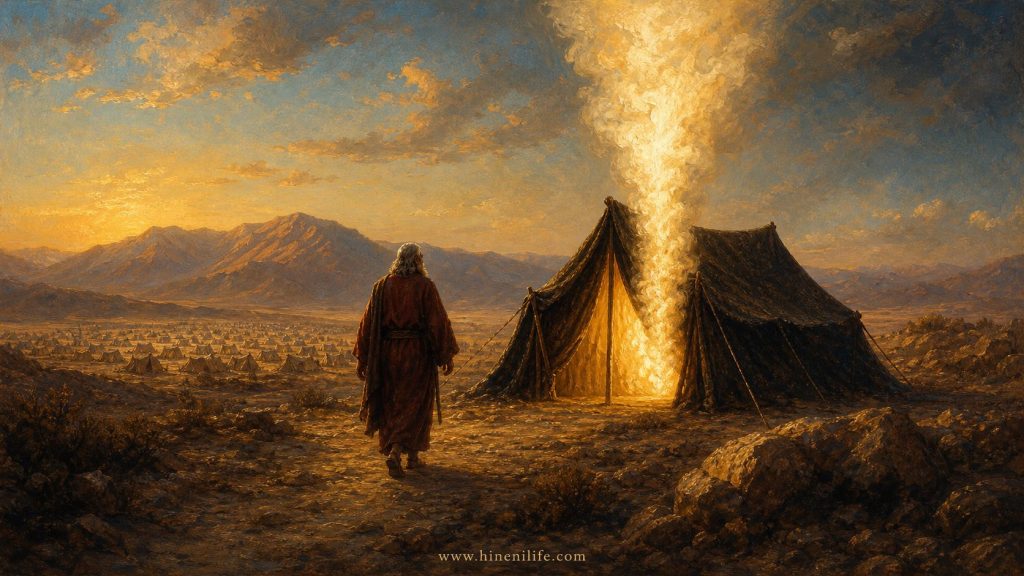
After Israel’s sin with the golden calf, the consequences of their rebellion continued. In Exodus 33, God told Moses to lead the people toward the land He had promised to Abraham, Isaac, and Jacob. He promised to send an angel before them and drive out their enemies. The promise of the land had not been forgotten.
But then God said something deeply painful:
“I will not go up among you.”
– Exodus 33:3 ESV
Israel could still receive the land. They could still receive guidance. They could still receive victory.
But the presence of God among them was now the central issue.
When the people heard this, they mourned.
What Is God’s Gift Without God Himself?
As I read this passage, one question began to challenge me:
Would I be satisfied if God gave me everything I wanted, but I did not truly have fellowship with Him?
It is possible for us to spend much of our lives asking God for His blessings.
We pray for our families. Our work. Our future. Our protection. Our needs.
There is nothing wrong with bringing these things before God. Scripture encourages us to depend on Him.
But Exodus 33 reminds me of something deeper.
God’s greatest gift is not merely what He gives us. God Himself is the greatest treasure.
The Israelites were being told that the Promised Land was still before them, yet God’s presence among them was in question.
That should make us stop and examine our own hearts.
Do I seek God only for what He can do for me? Or do I truly desire Him?
The Danger of Wanting God on Our Own Terms
The golden calf had already revealed something about Israel’s heart.
They were unwilling to wait. Moses had been away for a long time, and instead of trusting the God who had already led them out of Egypt, they wanted something visible before them. Something they could see. Something they could control.
They did not reject the idea of worship altogether. In fact, they tried to connect their idol with the worship of the Lord.
But they wanted worship on their own terms.
And that challenges me.
Sometimes, I may not openly reject God. But am I willing to follow Him only when His way agrees with my own plans? Am I willing to obey only when I understand everything?
Or am I becoming like Israel – wanting God to lead me, but only in the direction I have already chosen?
God repeatedly described Israel as a stiff-necked people. The expression carries the picture of an animal that stubbornly refuses to respond to the direction of its master.
That made me ask myself:
Am I stiff-necked before God?
When His Word corrects me, do I listen? When His way is different from mine, am I willing to turn? Or do I continue moving in the direction I have already decided?
Sin Must Never Be Treated Casually
Israel’s sin had consequences.
The relationship between God and His people had been seriously affected.
Moses pitched the tent of meeting outside the camp, and those who sought the Lord went out to it.
The passage does not explain every detail of why the tent was placed there, but the context clearly reminds us that Israel’s rebellion was not something to be treated lightly.
Sin is serious because God is holy.
For us as believers, this does not mean that every time we sin, God immediately abandons us. Through Jesus Christ, we have been brought near to God. But neither should we use God’s grace as an excuse to become comfortable with sin.
When the Holy Spirit convicts us, we should not justify ourselves. We should not hide. We should not try to make our disobedience look acceptable.
We should confess our sin, turn away from it, and come to God through the forgiveness and cleansing made possible by Jesus Christ.
God’s grace is not an invitation to take sin lightly. It is an invitation to return to Him.
Moses Spoke with God
Then we see one of the most beautiful parts of this passage.
Moses entered the tent of meeting, and the Lord spoke with him.
Scripture says:
“The LORD used to speak to Moses face to face, as a man speaks to his friend.”
– Exodus 33:11 ESV
This does not mean Moses literally saw the fullness of God’s face, because later in the same chapter God tells Moses that no one can see His face and live.
The expression describes the extraordinary directness and intimacy of Moses’ relationship with God.
As I read this, I found myself thinking about Moses. What a privilege it was to speak with God in this way.
But then I remembered something even more wonderful.
Through Jesus Christ, we too have been given access to God.
We may not have Moses’ unique role in redemptive history, but every believer has the privilege of coming before God.
That challenges me.
Am I using that privilege?
Do I only hear about God through sermons and other people? Or am I personally spending time with Him through His Word and prayer?
A relationship with God cannot be reduced to one day a week. We need fellowship with Him in our everyday lives.
Joshua Stayed Near the Tent
At the end of this section, we find a quiet detail:
Joshua did not depart from the tent.
The text does not explain exactly what Joshua was doing there or why he remained. So we should not invent details.
But it is still beautiful to notice that before Joshua later became the leader of Israel, Scripture already shows him close to Moses and near the place where the Lord met with him.
That spoke quietly to me.
Not every season of life is a season of visible leadership. Some seasons are simply seasons of waiting. Seasons when others may seem to be moving forward while we remain unnoticed.
But perhaps the important question during those seasons is not: “When will God use me?”
Perhaps the question should be: “Am I remaining faithful where God has placed me?”
Joshua remained. He did not need to be at the centre of attention. Sometimes, before God gives us greater responsibility, He teaches us simply to remain faithful. To stay near Him. To learn. To wait.
What Do I Really Want?
Exodus 33 brings me back to one question.
What do I really want from God?
Do I want His blessings? Yes, I am thankful for His blessings.
Do I want His guidance? Yes, I desperately need His guidance.
Do I want His provision? Yes, because everything I have comes from Him.
But beyond all these things, I do not want to lose sight of the greatest gift:
God Himself.
I do not want to follow Him only when His plans match mine. I do not want to seek Him only when I need something. I do not want to become stiff-necked when His Word corrects me.
And during seasons of waiting, I do not want distraction to take me away from His presence.
Lord, teach me to desire You – not merely the things You can give me.
Lord, examine my heart today. Am I seeking Your hand more than I am seeking Your heart?
Forgive me for the times I have wanted to follow You only on my own terms. Forgive me when I have resisted Your correction and continued in my own direction.
Keep my heart from becoming stiff-necked. Teach me to listen when Your Word corrects me and to turn when You show me that I am wrong.
Thank You for bringing me near to You through Jesus Christ. Help me not to take that privilege lightly.
And in every season of waiting, teach me to remain faithful. Keep me close to You, even when no one sees what You are doing in my life.
Lord, more than Your blessings, I want You.
Amen.
Hineni