

Called, Consecrated and Prepared
As I meditate on Exodus 29:1-9, I am reminded of something very important about God’s calling.
In Exodus 28:1, God specifically calls Aaron and his sons by name for the priestly ministry:
“Then bring near to you Aaron your brother, and his sons with him, from among the people of Israel, to serve me as priests…”
– Exodus 28:1 ESV
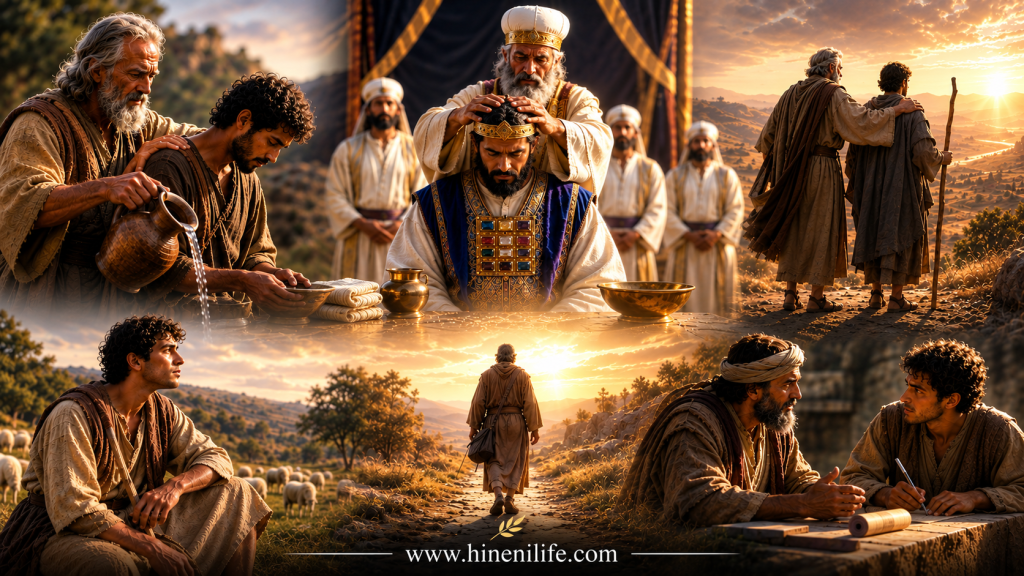
God called them and then gave detailed instructions concerning their priestly garments.
But when we come to Exodus 29, we see something else.
The calling was followed by a process of preparation.
God tells Moses to consecrate Aaron and his sons so that they may serve Him as priests. The sacrifices and bread had to be prepared. Aaron and his sons were brought to the entrance of the tent of meeting and washed. Aaron was dressed according to God’s instructions, the holy crown was placed upon him, and he was anointed with oil. His sons were also dressed, and finally Aaron and his sons were formally ordained.
There is a beautiful order here:
Calling – Preparation – Consecration – Service.
Aaron was called in Exodus 28, but before he began his priestly service, God took him through a process of preparation.
This makes me think about my own life.
Many times, when we believe God has called us to something, we immediately expect Him to use us. We wonder why the opportunities are not coming. We ask why the ministry is not moving forward or why God seems to be making us wait.
But perhaps we need to understand this:
God’s calling does not mean that our preparation is complete.
God may be preparing us through situations we do not understand.
Through waiting.
Through disappointments.
Through loneliness.
Through failures.
Through difficult relationships.
Through responsibilities that seem unrelated to the calling we believe God has given us.
We may ask, “Why is God allowing me to go through this?”
But what we see as a delay may sometimes be part of God’s preparation.
God is not only preparing the work for us. He is preparing us for the work.
That is why I am reminded of Elisha.
When Elijah called him, Elisha was working in the field. But after following Elijah, Elisha did not immediately become the prophet we later see in Scripture.
There was a season of serving.
There is a simple description of Elisha that always catches my attention:
“Elisha the son of Shaphat is here, who poured water on the hands of Elijah.”
– 2 Kings 3:11 ESV
Before Elisha stood before kings as a prophet, he was faithfully serving Elijah.
The hidden season was not meaningless.
It was part of his journey.
Joshua gives us another picture.
Before Joshua became the leader who would lead Israel into the Promised Land, he served alongside Moses. He was known as Moses’ assistant. He learned by walking with Moses, remaining near him and serving faithfully.
David gives us another powerful example.
David was anointed as king while he was still a young shepherd. The anointing came before the throne.
Between those two moments came years of difficulty, rejection, wilderness experiences and opportunities to trust God.
David had opportunities to take Saul’s life, but he refused to take the promise of God into his own hands.
God was not merely preparing David to sit on a throne.
He was shaping the heart of the man who would sit on it.
Scripture later describes David as a man after God’s heart who would do God’s will.
This is something I need to remember:
A calling is not a substitute for character.
A spiritual gift is not a substitute for holiness.
A ministry position is not a substitute for surrender.
We can desire to be used by God while resisting the very process through which God is forming us.
Even Aaron, though called by God, still needed to be washed and consecrated.
This reminds me that those who serve God are not spiritually superior people. We also need repentance. We also need cleansing. We also need grace. We also need Christ.
Our calling does not make us worthy before God.
Christ is our righteousness.
And perhaps this is where the preparation becomes even more beautiful when we look at Jesus.
Jesus began His public ministry when He was about thirty years old, according to Luke 3:23. Scripture does not describe those preceding years as though Jesus needed moral preparation for ministry. He was the sinless Son of God, perfectly obedient to the Father.
So I would not compare Jesus’ hidden years with the preparation of sinful servants in exactly the same way.
But His life does show us something about God’s appointed timing.
Jesus did not rush ahead of the Father’s will.
He lived according to the Father’s purpose and timing.
Again and again, we see Him saying that His hour had not yet come, and then, when the appointed hour came, He willingly went to the cross.
His life reminds me that God’s timing is never late.
The same principle can be seen in the New Testament servants who followed Christ.
Timothy was already known as a faithful disciple when Paul found him. Paul then took him along on his missionary journey. Timothy learned by walking with experienced servants of God and participating in ministry before eventually carrying significant responsibility himself.
Paul himself also gives us a remarkable picture.
God had called him by grace and set him apart for the Gospel. After his conversion, Paul went to Arabia and later returned to Damascus. He tells us that three years after his conversion he went to Jerusalem. Later, he speaks of another Jerusalem visit occurring after fourteen years. The exact chronology of these periods should not be turned into a precise timetable for ministry preparation.
What we can clearly see, however, is that Paul’s calling did not mean that everything happened immediately.
There was a journey.
There were years of learning, serving, preaching and growing.
Acts later records Paul serving in Antioch before the Holy Spirit said:
“Set apart for me Barnabas and Saul for the work to which I have called them.”
– Acts 13:2 ESV
Then they were sent out by the Holy Spirit.
So again we see the beautiful pattern:
Called – prepared – set apart – sent.
I am learning that God’s preparation is not necessarily found in extraordinary experiences.
Sometimes it is found in very ordinary faithfulness.
Elisha poured water.
Joshua served Moses.
David cared for sheep and learned to trust God in the wilderness.
Timothy walked alongside Paul in ministry.
Paul spent years in places and circumstances where God’s larger purpose was not yet visible.
And through all these lives, I see one important truth:
God is concerned not only with what He wants to accomplish through us, but also with what He wants to form in us.
Perhaps the season I call a delay is actually a season of formation.
Perhaps the closed door is protecting me while God prepares me.
Perhaps the difficult circumstance is exposing something in my character.
Perhaps the waiting is teaching me dependence.
Perhaps the hidden season is preparing me to carry responsibility without losing my dependence upon God.
Therefore, instead of continually asking,
“Lord, when will You use me?”
perhaps I need to ask:
“Lord, what are You forming in me while I wait?”
And perhaps my prayer should not simply be:
“Here I am, Lord. Use me.”
But:
“Here I am, Lord. Prepare me.”
Cleanse me.
Correct me.
Teach me.
Remove my pride.
Strengthen my faith.
Form my character.
Make me more like Jesus.
And when Your appointed time comes, use me according to Your purpose.
Peter gives us a beautiful reminder:
“Humble yourselves, therefore, under the mighty hand of God so that at the proper time he may exalt you.”
– 1 Peter 5:6 ESV
At the proper time.
Not according to my timetable.
Not according to my expectations.
According to His wisdom.
So, if I believe God has called me, I do not want to become impatient with His preparation.
I want to remain faithful where He has placed me today.
If He is asking me to wait, I will wait.
If He is asking me to serve quietly, I will serve.
If He is exposing something in my character, I will repent.
If He is taking me through a difficult season, I will trust Him.
Because the season of preparation is not outside God’s purpose. It can itself be part of His purpose.
And ultimately, God’s greatest work in me is not simply to make me useful.
It is to make me more like Christ.
So today I submit myself again into the hands of God.
I may not understand the season.
I may sometimes feel disheartened, alone or misunderstood.
I may wonder why the door has not opened yet.
But I choose to trust the One who called me.
The same God who called Aaron also prepared him.
The same God who called Elisha allowed him to serve Elijah.
The same God who anointed David took him through the wilderness before the throne.
And the same God who calls us is able to faithfully complete His work in us.
Here I am, Lord. Prepare me before You use me.
Let my waiting not be wasted.
Let my hidden seasons form my character.
Let my trials deepen my faith.
Let my service teach me humility.
And above everything else, make me more like Jesus.
Hineni