

How to Live While We Wait for the Lord
James 5:7-20
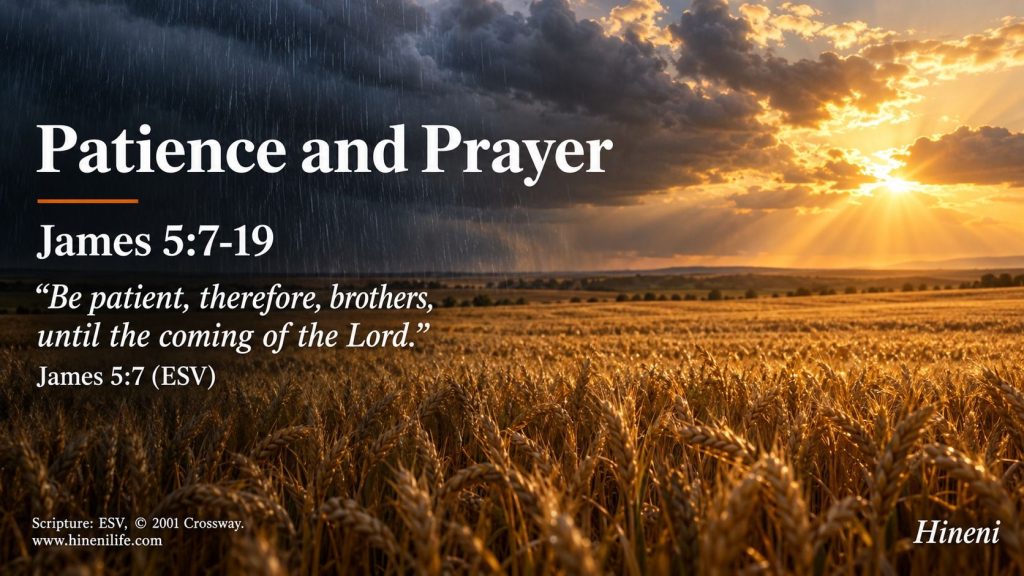
Waiting is not always easy. When we go through trials, face unanswered prayers, or experience prolonged suffering, we may find ourselves wondering how long we must continue. The waiting itself can become exhausting. Sometimes, the pressure we carry begins to affect not only our relationship with God but also our relationships with others.
As I meditated on James 5:7-20, I was reminded that the Christian life is not merely about waiting for the Lord to return. It is about how we live while we wait.
James gives us practical instructions. We are called to endure patiently, speak truthfully, pray earnestly, and care for one another faithfully. Our waiting must be shaped by the hope of the Lord’s coming.
Establish Your Heart in Patience
James 5:7-11
James begins by directing our attention to the farmer.
A farmer patiently waits for the precious fruit of the earth. He cannot force the rain to come or make the harvest arrive sooner. He must continue his work and trust the process.
“Be patient, therefore, brothers, until the coming of the Lord. See how the farmer waits for the precious fruit of the earth, being patient about it, until it receives the early and the late rains.”
– James 5:7, ESV
In the same way, James calls us to be patient until the coming of the Lord. He reminds us that the Lord’s coming is near and encourages us to establish our hearts.
This challenges me to examine my own attitude toward waiting. When God’s timing does not match my expectations, I may become restless. I may want immediate answers or visible results. But faith does not require me to understand every delay. It calls me to remain steadfast in the One who is faithful.
James also warns us not to grumble against one another. When we are under pressure, it is easy to become impatient with the people around us. Our suffering can turn into frustration, and our frustration can become criticism or bitterness.
James reminds us that endurance must not come at the expense of our relationships.
He points to the prophets who spoke in the name of the Lord and to Job, whose endurance reveals the compassion and mercy of God. The purpose is not to suggest that suffering is easy, but to remind us that the Lord is compassionate and merciful even in the midst of our trials.
As I wait for the Lord, I need to establish my heart in Him rather than allow my circumstances to determine my attitude.
Let Your Words Reflect Your Faith
James 5:12
James moves from patience to the integrity of our speech.
“Let your yes be yes and your no be no, so that you may not fall under condemnation.”
– James 5:12, ESV
This instruction echoes the teaching of Jesus in the Sermon on the Mount. James calls us to a life of simple, truthful speech.
When we are under pressure, we may be tempted to make rash promises, exaggerate, or defend ourselves with unnecessary words. Sometimes, anxiety makes us speak more than we should. At other times, we may use promises to convince others of our sincerity.
But a life of faith should be marked by honesty and integrity.
Our words should be trustworthy. We should not need to rely on dramatic promises to establish our credibility.
This reminds me that waiting on the Lord also involves being faithful in the ordinary things of life. Even when circumstances are difficult, my words must reflect the character of Christ.
Am I speaking truthfully and calmly, or am I allowing anxiety and pressure to control my speech?
Bring Your Life Before God in Prayer
James 5:13-18
James now directs our attention to prayer.
“Is anyone among you suffering? Let him pray. Is anyone cheerful? Let him sing songs of praise.”
– James 5:13, ESV
James teaches us to bring every season of life before God. In suffering, we pray. In joy, we praise. When we are weak or sick, we seek the support and prayers of fellow believers.
I find this particularly meaningful because we often approach God differently depending on our circumstances. When things are going well, we may forget to praise Him. When we are suffering, we may struggle to pray. When we are weak, we may try to hide our condition from others.
But James presents a life in which every circumstance becomes an opportunity to turn toward God.
He also calls the sick to seek the elders of the church for prayer and anointing in the name of the Lord. The passage emphasizes the importance of prayer, the care of the church, and our dependence upon God. It does not mean that every illness will necessarily be healed immediately or that sickness is always the result of personal sin.
James also speaks about confessing our sins to one another and praying for one another.
This challenges me to think about the kind of fellowship we have as believers. We often find it easier to appear strong than to admit our weaknesses. We may be comfortable sharing our victories but reluctant to speak about our struggles.
Yet genuine Christian fellowship requires humility and vulnerability.
Confession and prayer are not invitations to shame or gossip. They are opportunities for loving accountability, encouragement, and restoration.
James then reminds us of Elijah.
Elijah was a man with a nature like ours, yet he prayed earnestly. James uses Elijah’s example to encourage us in the power of prayer.
This is deeply encouraging. Prayer is not powerful because we are extraordinary people. It is powerful because we depend upon the living God.
I do not need to hide my weakness from God. I can bring my struggles, fears, and burdens before Him. I can also allow fellow believers to pray for me.
The waiting season should not isolate me from God or His people. It should draw me into deeper dependence upon Him.
Do Not Abandon the Wandering
James 5:19-20
James ends his letter with a call to bring back someone who has wandered from the truth.
At first, these verses may seem like an abrupt conclusion. After speaking about patience, prayer, suffering, and fellowship, why does James end with the restoration of a wandering believer?
As I reflect on this, I see a meaningful connection.
While we wait for the Lord, not everyone around us will remain steadfast. Some may become discouraged. Others may be led away by temptation, false teaching, bitterness, or spiritual exhaustion.
James reminds us that our responsibility toward one another does not end when someone begins to wander.
We must not be quick to judge, gossip about, or abandon those who are struggling. Instead, we are called to lovingly seek their restoration.
“Let him know that whoever turns a sinner from the error of his way will save his soul from death and cover a multitude of sins.”
– James 5:20, ESV
This is a serious reminder of the spiritual significance of restoration. Turning someone back toward the truth is not a small act of kindness. It can have profound consequences for that person’s spiritual life.
At the same time, restoration does not mean ignoring sin or avoiding accountability. True love seeks to bring a person back to the truth with humility, compassion, and faithfulness.
This reminds me that Christian fellowship is not merely about gathering together. It is about caring for one another’s spiritual well-being.
While I am waiting for the Lord, I must also be attentive to those around me who may be growing weary.
Is there someone who needs encouragement? Is there someone who has begun to drift away? Am I willing to reach out with love rather than remain indifferent?
How to Live While We Wait
As I look at the whole passage, I see a practical picture of Christian living.
James calls us to establish our hearts in patience, guard our words with integrity, bring our circumstances before God in prayer, and care for those who are struggling.
Waiting for the Lord is not passive inactivity. It is a life of faithful obedience.
The farmer waits patiently for the harvest. The believer waits faithfully for the coming of the Lord. In both cases, waiting involves trust, perseverance, and continued faithfulness.
I may not know when the Lord will return. I may not understand every trial or receive immediate answers to my prayers. But I know how He calls me to live in the meantime.
I am called to remain steadfast in faith, truthful in speech, earnest in prayer, and loving toward my fellow believers.
And when someone begins to wander, I must remember that the same grace that sustains me is the grace that can restore them.
We do not know when the Lord will return, but we know how He calls us to live until He does.
Heavenly Father, thank You for reminding me through Your Word how I should live while waiting for the coming of our Lord. Establish my heart in patience. Help me not to become restless or bitter when Your timing differs from my expectations. Guard my words and help me to live with honesty and integrity. Teach me to bring every circumstance before You in prayer. Give me the humility to acknowledge my weaknesses and the courage to seek the prayers and support of fellow believers. Help me to care for those who are struggling and to lovingly seek the restoration of those who have wandered from the truth. May I never become indifferent to the spiritual well-being of others. Until the Lord comes, help me to remain faithful, prayerful, and steadfast in my walk with You. In Jesus’ name, Amen.
Hineni